
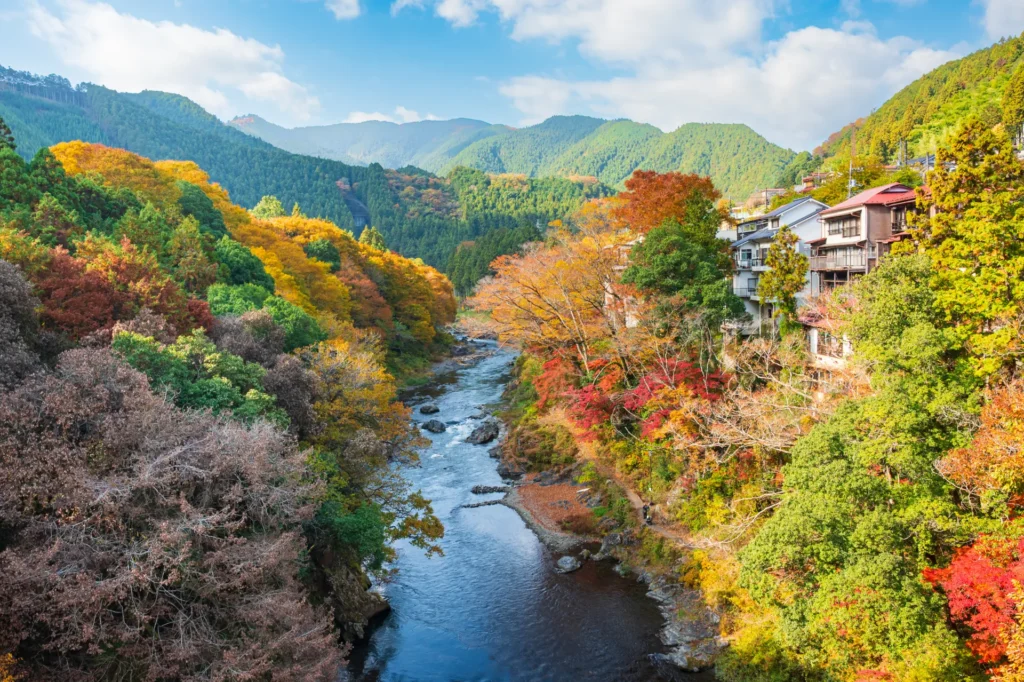
Tourist guideOn days when you’re exploring Okutama without a car, it’s better to plan a trip where you carefully appreciate one scenic spot at a time, rather than visiting many tourist attractions close to the station. By starting at Okutama Station and dividing your route into walking sections and bus sections, you can enjoy the waterfront, villages, and mountain air without driving.
TRAVEL INFORMATION
Overview of a half-day plan to enjoy Okutama without a car
- Starting point: JR Okutama Station
- Transportation: Train, walking, and bus as needed.
- Duration: Approximately half a day. Calculate backwards from the return train and bus schedules.
- Choose one of the following themes: waterside, village, or mountain trail.
- Priorities: return transportation, weather, and foot safety.
TRAVEL GUIDE
This article summarizes how to plan a half-day trip to Okutama without a car, things to check at the train station, how to choose a walking theme, and how to adjust your plans based on weather and transportation.
Basics of enjoying Okutama without a car
Upon arriving at Okutama Station, don’t immediately start sightseeing. Instead, check for restrooms, drinks, and train schedules for your return journey. Check bus service, road conditions, and destination operating days at the tourist information center or official transportation information website. Deciding your return trip in advance will prevent you from getting too engrossed in the mountain scenery and spending too much time there.
When traveling without a car, it’s more important to leave some flexibility in your itinerary, focusing on a single destination accessible from the train station, rather than trying to increase the number of places you can visit. By combining walking and bus travel, and working backward from your return time, you can create a manageable half-day itinerary.
Check the access information provided by the Okutama Tourism Association. ↗
Choose one from “Waterside,” “Village,” or “Mountain Path.”
If you only have half a day, it’s easier to focus on one theme for your destination. You could spend a day walking along the water’s edge, another day admiring the settlements and bridges around the train station, and another day taking a bus towards the mountains and walking through nature. Rather than rushing to visit multiple places, you can pay attention to the scenery along the way—stone walls by the roadside, the sound of the river, the eaves of houses, and so on.
| theme | Things I want to find | Confirm |
|---|---|---|
| Waterside | The sound of the river, the bridge, the scenery along the river | Flooding and ground conditions after rain |
| settlement | Rows of houses, stone walls, and elevation differences of roads | Consideration for private property and local roads |
| mountain path | Vegetation on the slope, the forest air, the view | Bus schedule, weather, turnaround point |
A day walking by the water
Along the river, we’ll slowly enjoy the sound of the flowing water and the scenery visible from the bridges. After rain, water levels and ground conditions can change rapidly, so we’ll avoid areas that seem dangerous and switch to exploring the area around the station.
A day spent walking through the village
Walking through the settlements around the station reveals details about the houses, stone walls, and road gradients that are often overlooked when simply driving past. When taking photographs, be sure to respect private property and people’s lives, and choose locations that do not obstruct traffic.
The day we headed towards the mountain path
If you’re heading towards the mountains, it’s safest to travel to a distant location on the way there and return to the area around Okutama Station on the way back. In areas with limited bus service, be sure to factor in waiting time for the next bus and decide on your return time in advance.
Okutama, a place you can only see without a car.
There are small settlements that are easy to miss when driving past, and changes in river elevation that you only notice when walking from the station. Leaving room to stop along the way makes the journey itself a trip. Remembering even just one scenic spot on the way from the station to your destination will increase the satisfaction of your half-day trip.
Half-day schedule
Check your return transportation at the station.
I’ll check the location of the train I’ll take home, the bus I’ll be using, the restrooms, and the places
Choose one theme for your walk.
Choose from waterside locations, villages, and mountain trails to find one that suits the weather and your physical condition on that day.
I decided on a time to return to the station and started walking.
I’ll leave some time to enjoy the scenery, while making sure to time my trip to catch the last flight.
Recommended combination
- Check traffic information before you leave.Check the access information from the Okutama Tourism Association and the train and bus service status for the day.
- I’ll get ready at Okutama Station.Check your drink needs, restroom availability, and return time, and then decide on a theme for the day.
- On the way there, we’re heading to a distant place.If you use the bus, the basic plan is to travel there and return to the station on the way back.
- Enjoy the scenery along the way.I focus on things that can only be discovered on foot, such as the surface of the river, the eaves of houses in the settlement, and the vegetation on the slopes.
- I returned to the station with plenty of time to spare.I will prioritize making it in time for my return transportation, including any waiting time until the next flight.
Prioritize the return time and weather.
After rain, riverbanks and mountain paths pose risks of flooding, rockfalls, and mud. If you feel it’s dangerous, change your plans and head to a train station or indoor facility. When traveling without a car, prioritizing your safety on the return trip over sticking strictly to your original schedule will make you want to come back again.
- Check the number of buses and the next available bus in case you miss yours.
- After rain, check for information on rising water levels, falling rocks, muddy conditions, etc.
- Choose non-slip shoes instead of sandals.
- Keep maps and the time handy, considering that information may be difficult to obtain due to communication conditions or weather.
- If you feel unsafe, turn back and switch to exploring the area around the station.
Deepening your understanding of “one destination” in a car-free trip
In Okutama, you’ll likely find more satisfaction by dedicating time to a single destination rather than visiting many places far from the station. If you’re near a body of water, listen to the sound of the flowing water; if you’re in a village, walk along the undulating paths and observe the rows of houses; if you’re on a mountain trail, decide on a turnaround point. Because transportation is limited in this area, a plan that focuses on carefully exploring a few places is ideal.
FAQ
Can you enjoy Okutama without a car?
You can enjoy it. By starting from Okutama Station, dividing the trip into sections to be walked and sections to be traveled by bus, and narrowing down your destination to just one, it becomes easier to plan a manageable half-day trip.
What theme would you recommend for a half-day session?
It’s recommended to choose one from the options of a waterside area, a village, or a mountain trail, depending on the weather and your energy level. If it’s after rain or on a day with limited return train service, leave some room to switch to exploring the area around the station.
Things to be careful of when using the bus?
The basic plan involves traveling to a distant location on the way there and returning to Okutama Station on the way back. Please check the waiting time until the next bus and the return time to the station in advance.
Can you walk on rainy days or after it rains?
There is a risk of flooding, falling rocks, and muddy conditions along rivers and mountain trails. If you feel it is dangerous, do not take risks and change your plans to go to a train station or an indoor facility.
Official Information
Access information from the Okutama Tourism Association ↗
Traffic, road conditions, and destination operating status may change. Please check official information and the day’s operating status before departure.
Next to read
※The information provided is current as of September 16, 2026. Traffic, weather, and facility operating status may change, so please check for the latest information before you go.